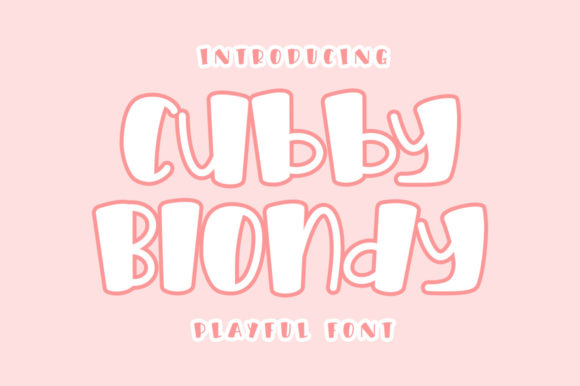
Cubby Blondy: A Bold Display Font for Modern Web Design Projects
Choosing the Right Typeface for a Creative Portfolio Homepage
I recently started working on a portfolio homepage for a freelance illustrator who wanted a bold, expressive identity that stood out from the usual minimalist design trends. The challenge was to find a typeface that could carry the brand’s personality while still being usable across key digital touchpoints. That’s when I discovered Cubby Blondy.
Cubby Blondy immediately caught my eye with its confident letterforms and modern edge. It’s not just another decorative font—it has a unique visual rhythm that feels both trendy and intentional. The curves are sharp yet fluid, and there’s a subtle balance between its bold presence and legibility. I decided to test it in the hero section of the homepage, pairing it with a clean sans serif for body text to keep the layout readable and balanced.
Testing Cubby Blondy in Real Web Layouts
First, I dropped Cubby Blondy into the hero headline: a large, centered title over a full-width image banner. The font held up surprisingly well, even on retina displays. Its thick strokes and open counters made it easy to read at a glance, which is crucial for landing page headlines that need to grab attention quickly.
Next, I tried it in a mobile preview. This is where many display fonts fall short—too much flair can make letters bleed together on smaller screens. But Cubby Blondy’s distinct character shapes and consistent spacing helped maintain clarity. I adjusted the font size and line height slightly for mobile, and it worked well as a header above the project thumbnails in the portfolio grid.
Where Cubby Blondy Shines in Digital Design
From my testing, Cubby Blondy is best suited for headers, hero titles, and short branded text. It’s not ideal for long paragraphs or body copy, which makes sense for a display font. Here’s where I found it most effective:
- Hero sections – Especially when paired with a strong visual or dark overlay.
- Call-to-action buttons – Used sparingly, it adds personality without hurting readability.
- Logo text or branded headers – Works well for brands that want to stand out with a unique typographic voice.
- Social media graphics – Its modern appeal translates well to Instagram stories and promotional banners.
Readability and Visual Hierarchy Considerations
One of the biggest concerns when using a stylized font like Cubby Blondy is readability. While it’s visually striking, it’s important to use it strategically. I found that keeping line lengths short and ensuring strong contrast between text and background helped maintain legibility.
For example, when I placed Cubby Blondy over a textured background image, I added a semi-transparent dark overlay behind the text. This helped the white font pop without making it hard to read. On solid backgrounds, I tested both light and dark versions and found it performed well in both scenarios, especially when letter spacing was slightly increased.
Font Pairing Tips for Web Designers
Cubby Blondy works best when paired with a simpler, more neutral typeface. For the illustrator’s portfolio, I used it for the main headers and paired it with a clean sans serif like Montserrat or Open Sans for navigation, captions, and paragraph text. This contrast created a strong visual hierarchy and helped guide the user through the layout.
If you're aiming for a more editorial or refined look, consider pairing Cubby Blondy with a modern serif font for subheadings or quotes. This adds depth and variety to the page without overwhelming the reader.
Using Cubby Blondy Across Different Website Types
I’ve since used Cubby Blondy in a few other digital projects with similar success:
- Boutique online store – As the main logo font and category headers, giving the shop a distinctive, curated feel.
- Coaching website – In hero sections and service titles to convey confidence and approachability.
- Product landing page – For the main headline and feature bullet points, helping the page feel more dynamic and engaging.
What to Check Before Using Cubby Blondy in Production
Before finalizing the font for a live website or client project, I made sure to check the following:
- Webfont availability – Confirm that the font is available in web-optimized formats (like WOFF2).
- Font weights and alternates – Cubby Blondy should ideally include multiple weights and stylistic alternates for flexibility.
- Multilingual support – Especially important if the site serves a global audience.
- Commercial licensing – Make sure the font is cleared for commercial use, especially if you're building a site for a paying client or online store.
Final Thoughts on Cubby Blondy for Digital Designers
Cubby Blondy is a strong contender for designers looking to inject personality into their web projects without sacrificing usability. It’s not a one-size-fits-all font, but when used thoughtfully—especially in headers, hero sections, and branded content—it can elevate the visual tone of a digital brand.
If you're working on a creative portfolio, boutique site, or any project where brand expression matters, I recommend giving Cubby Blondy a test run. Just remember to pair it with a legible supporting typeface, check its performance across devices, and ensure the licensing is appropriate for your use case. Done right, it can be the finishing touch that makes your design stand out.